Every procurement brief that crosses a moulder’s desk in Melbourne now has a line about recycled content. Sometimes it is a customer requirement, sometimes a tender condition, sometimes a sustainability target that someone signed the business up to at a conference. Somewhere between that line and the purchase order, it has to survive contact with an actual moulding machine — which brings us to the question everyone is really asking: can we make this part from recycled plastic without it failing in the field?
[Puts the coffee down. Serious face.] The honest answer depends far less on the word “recycled” than on four things you can specify and control: which stream the material came from, how tightly that stream is graded, what the part has to survive, and whether your tool and your process were set up for a resin that varies. This guide on recycled plastic injection moulding works through all four in the order the decisions actually get made — the same order we work through them with customers at our Braeside plant.
The short version
- Yes, recycled plastic can be injection moulded — PP and HDPE from well-graded streams run close to virgin on most commodity parts.
- The risk is variation, not weakness. A single batch will usually test fine. Batch three is where you find out.
- Impact strength and elongation drop first. Stiffness and density move least. Design margin belongs where the polymer chains have been shortened.
- Colour is the hardest constraint to negotiate. You can have any colour you like, as long as it is darker than whatever this material used to be.
- Recycled resin rewards the parts nobody sees. Crates, trays, bases, internal structures, industrial housings — volume parts where cosmetics are not the sell.
What this covers
- Can recycled plastic be used in injection moulding?
- PCR, PIR and regrind: know what you are buying
- Material selection, polymer by polymer
- Strength and performance: what actually changes
- Consistency, and why it kills more projects than strength
- Colour, cosmetics and the shade floor
- Additives, stabilisers and compatibilisers
- Tooling and process settings
- When recycled resin makes sense — and when it does not
- Recycled-content claims in Australia
- A procurement checklist
- Working with a recycled plastics manufacturer in Melbourne
- Frequently asked questions
Can recycled plastic be used in injection moulding?
Yes — and for a large share of the parts moulded in Australia, it already is. Recycled polypropylene and recycled HDPE have been running in commodity injection moulding for decades: crates, bins, pallets, trays, plant pots, automotive under-bonnet clips and several hundred parts you have handled this week without once thinking about where the material had been.
What has changed is not the technical possibility. It is the expectation. A decade ago recycled content was a cost decision; today it arrives as a specification, usually with a percentage attached, and often on a part that was never designed with a variable feedstock in mind. That is where the trouble starts — not with the material, but with a drawing written for virgin resin and a material that is no longer virgin.
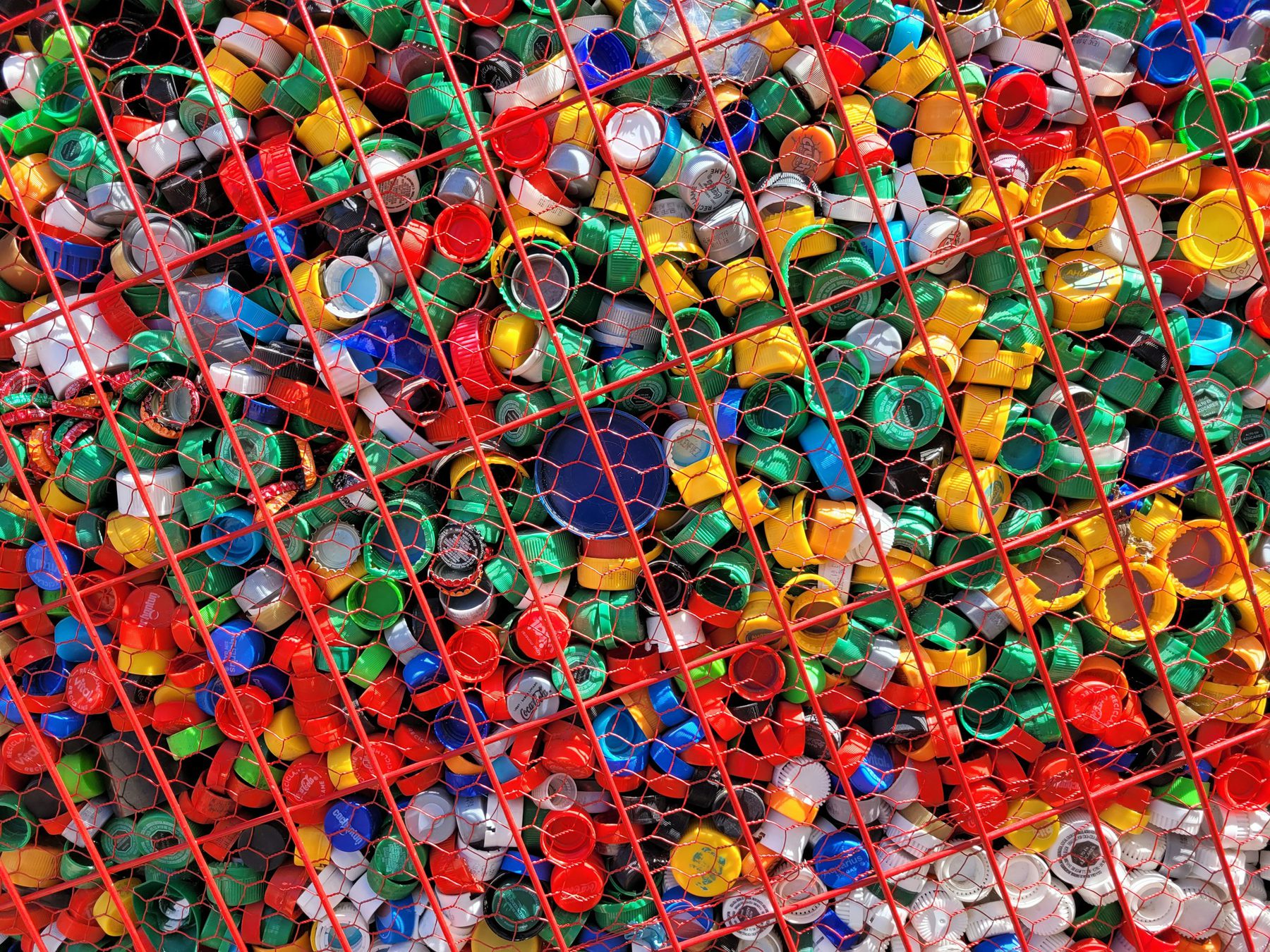
The useful reframing is this: recycled plastic is not a material, it is a supply chain. Two loads of “recycled PP” can differ more from each other than PP differs from PE. Specifying recycled resin without specifying the grade is a bit like ordering “timber” and hoping. Everything that follows is really about narrowing that gap before it reaches your tool.
PCR, PIR and regrind: know what you are actually buying
Three quite different things get sold under the word “recycled”, and the difference between them explains most of the performance gap between one recycled plastics manufacturer‘s parts and another’s.
| Stream | Where it comes from | What to expect |
|---|---|---|
| Regrind | Your own sprues, runners and rejected shots, granulated and fed back in. | The cleanest recycled material you will ever get — same grade, same colour, same additive package. Degrades a little with each heat history, so it is usually blended at a set ratio rather than run neat. |
| PIR Post-industrial | Offcuts, purgings and scrap from another manufacturer’s process. | Known polymer, known grade, low contamination, often a single colour. The pragmatic starting point for a first recycled-content part. |
| PCR Post-consumer | Kerbside and commercial collection: bottles, caps, crates, containers. | What most sustainability targets actually mean. Widest variation in colour, melt flow and contamination — and the stream where supplier grading matters most. |
| Mixed / mechanically recovered | Blended polymer streams that were not separated cleanly. | Cheap, and appropriate for thick, low-stress, non-cosmetic parts. Treat published properties as indicative only. |
If a quote for recycled plastic injection moulding in Melbourne does not tell you which of those four you are being offered, that is the first question to ask. The second is what grading the supplier does: washed or unwashed, sorted by polymer only or also by melt flow index, colour-sorted or mixed — and whether they can hold that specification across a year of supply rather than one enthusiastic trial pallet.

The grade you can repeat beats the grade that tests best
A one-off sample from a good load proves very little. What matters for a production part is the worst load your supplier will ship you in twelve months, because that is the one that will define your reject rate, your cycle time and the phone call you get from your customer.
Material selection, polymer by polymer
Not every polymer recycles equally well. Broadly, the polyolefins tolerate reprocessing with good grace; the condensation polymers and the engineering resins are fussier, because their chains shorten through hydrolysis when they are melted wet. Melting plastic wet is the moulding equivalent of putting a knife in the toaster: it works right up until it does not.
Polypropylene (PP)
The workhorse of recycled plastic manufacturing, and the easiest place to start. Recycled PP from a well-sorted stream is genuinely close to virgin for stiffness and tensile behaviour. Expect the melt flow index to sit higher and to move between batches — which is a gating problem before it is a strength problem. Impact-modified and talc-filled grades are widely available with recycled content.
HDPE and LDPE
Also well suited, and the backbone of Australian crate, bin and container production. HDPE from bottle streams is one of the best-sorted post-consumer feedstocks available here. Environmental stress crack resistance is the property worth testing rather than assuming — it is sensitive to contamination and to any shift in molecular weight distribution.
ABS, HIPS and PS
Usable, usually from post-industrial streams, and common in electronics housings and appliance parts. Two cautions: ABS is hygroscopic and must be dried properly or you will get splay and a real drop in impact strength; and recycled styrenics tend to yellow, which narrows your colour options further than PP or HDPE would.
PET
Excellent recovery infrastructure — PET is the poster child of every kerbside campaign ever run — but injection moulding it means taking drying seriously, because intrinsic viscosity falls quickly if moisture is present at melt. A well-trodden path for preforms and thick-wall parts, and a much harder one for thin-wall structural components.
Engineering resins: PA, PC, POM
Possible, but this is specialist territory. Recycled nylon and polycarbonate streams are smaller, more expensive and far more sensitive to contamination and moisture; a small fraction of the wrong polymer can take a large bite out of impact performance. If a load-bearing or safety-critical part is in engineering resin, treat recycled content as something to qualify carefully rather than something to specify by default.
Strength and performance: what actually changes
Reprocessing shortens polymer chains. Every property that depends on chain length and entanglement moves; the properties that depend mostly on the chemistry itself barely move at all. That one sentence predicts most of what you will see on a test report, and saves a surprising number of meetings.
| Property | Typical direction | What it means for the part |
|---|---|---|
| Impact strength | Down, sometimes sharply | The first thing to check. Drop tests, corner impacts, cold performance and anything with a snap fit. |
| Elongation at break | Down | Living hinges, clips and press fits lose margin before anything else does. |
| Tensile strength | Down slightly | Usually manageable with modest wall or rib changes. |
| Flexural modulus / stiffness | Roughly unchanged, sometimes up | Parts can feel stiffer and more brittle at the same time. Do not read stiffness as toughness. |
| Melt flow index | Up, and variable | Affects fill, packing and flash. The property most likely to differ between two loads of the same grade. |
| Colour and gloss | Darker, less consistent | A cosmetic constraint, not a structural one — but usually the one that ends the conversation. |
| Density | Essentially unchanged | Part weight is a poor indicator of whether anything has gone wrong. |
Design the margin where the polymer actually lost something. Adding wall thickness to a part that is failing on impact rarely fixes it; moving the gate, softening a radius or adding an impact modifier usually does.
The practical implication for product designers is that a part converted to recycled resin is a redesign, not a substitution. Generous radii, no sharp internal corners, ribs kept away from high-stress edges, and impact tested on moulded parts rather than on standard test bars — because your customer will drop the part, not the test bar.
Consistency, and why it kills more projects than strength
Almost every recycled-content project that fails does so on variation, not on strength. Batch one is a great first date: it moulds beautifully, the part passes, the program gets approved. Four months later a load with a different melt flow arrives, short shots start appearing, somebody winds up the injection speed to make the problem go away, and the reject rate never quite comes back down.
Controlling that is a supply-chain exercise more than a moulding one:
- Specify the grade, not the label. Melt flow index with a tolerance, polymer purity, moisture, ash content and a colour reference — written into the purchase specification, where it is enforceable.
- Lock the source. One supplier, one stream, one grading process. Blending two nominally identical recycled grades introduces exactly the variation you are trying to remove.
- Sample across loads, not within one. Three shots from one bag tells you about that bag. It tells you nothing about the pallet after it.
- Build the blend deliberately. A fixed virgin-to-recycled ratio is a control, and it is how most production parts reach a recycled-content target without inheriting the full variance of the stream.
- Run the pre-production samples. We run three sample stages before production on a new tool — see our design and tooling process — and on a recycled-content part that is where drift shows up while it is still cheap to fix.
Colour, cosmetics and the shade floor
This is where most recycled specifications get quietly renegotiated. Recycled feedstock carries the colour of everything that went into it, so every stream has a floor — a darkest-possible starting point you cannot go lighter than, no matter how much pigment you add or how firmly the brand guidelines are worded.
Natural post-consumer PP typically arrives grey-to-beige. Mixed-colour streams go grey-brown. You can pigment down from there into charcoal, navy, forest green, black and the deeper industrial colours. Black is always available. This is not a coincidence, and it explains a great deal about the recycled parts you already own.
What you cannot reliably do is white, pastels, bright yellows, clean reds, or anything that has to match a brand colour across batches. If the part must be a specific light colour, either accept a lower recycled percentage with a virgin carrier, or move the recycled content to a part the customer never sees.
Gloss and surface finish shift too. Contamination and filler show up as specks and slight texture, which reads as “recycled” to an end customer — an asset on a sustainability-led product, and a warranty conversation on a premium one. Same speck, different meeting.

Additives, stabilisers and compatibilisers
Recycled resin is rarely run neat in a demanding application. The additive package is how you claw back what reprocessing took:
- Heat stabilisers and antioxidants — the original package was partly consumed during the material’s first life and again during reprocessing. Replenishing it protects the melt through your cycle.
- Impact modifiers — the direct answer to the property that falls first. Costs stiffness and money; frequently the difference between a part that passes and one that does not.
- Compatibilisers — where a stream carries a small fraction of a second polymer, these improve adhesion at the interfaces instead of leaving them as crack initiation sites.
- UV stabilisers — non-negotiable for anything living outdoors in Australia, and doubly so for a material with an unknown exposure history.
- Nucleating agents and fillers — talc and glass restore stiffness and dimensional stability, and can shorten cycle time. They also make the part harder to recycle again at end of life, which is worth weighing if circularity was the entire point.
Tooling and process settings
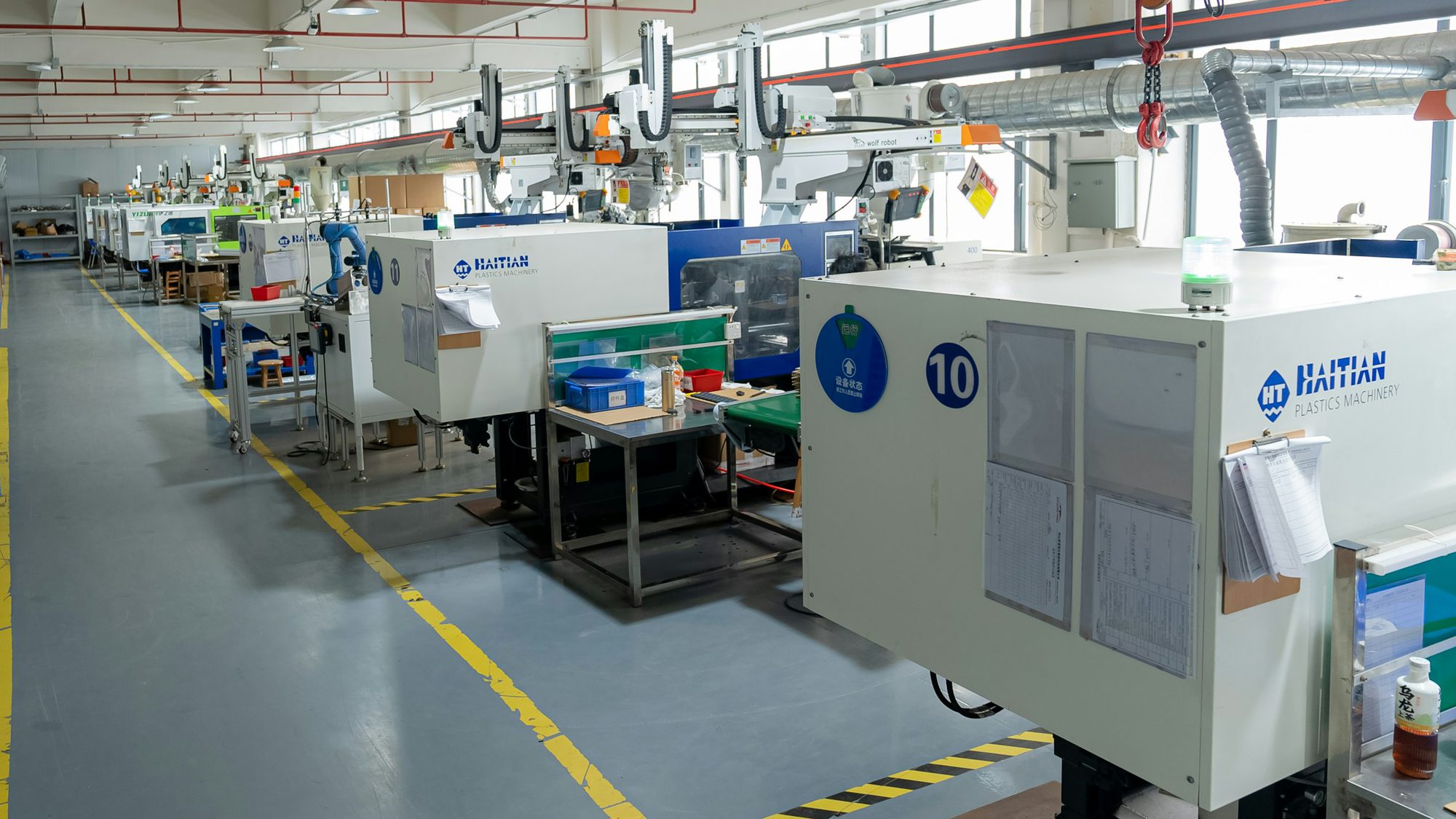
You do not need a different machine to mould recycled plastic. You do need a tool and a process with more tolerance built in. Our moulding capability runs from 100 to 1,800 ton, and none of that range cares whether the pellets have had a previous life — the tool cares a great deal.
On the tool
- Gates sized generously — a higher, more variable melt flow is easier to absorb through a large gate than a marginal one.
- Venting increased. Recycled streams carry more volatiles, and burn marks at the end of fill are a venting problem far more often than a temperature one.
- Hardened, well-polished surfaces where filler content is high or contamination is possible; abrasive wear is the quiet cost of a dirty stream.
- Radii opened up wherever the part is likely to see impact.
On the process
- Drying treated as mandatory, not optional — for PET, ABS and nylon it is the single biggest determinant of whether the part performs.
- Melt temperature kept at the low end of the window; this material has already been through at least one heat history and does not need another enthusiastic one.
- Purging discipline between grades, because cross-contamination is harder to diagnose in a material that already varies.
- A process window documented with real tolerances, so an operator has somewhere legitimate to move when a load runs differently.

Recycled content is a design decision, made early
Deciding at the tooling stage that a part will run recycled resin costs very little. Deciding it after the tool is cut, the colour is signed off and the supply agreement is written costs a great deal more — and is usually the version that ends in a compromise nobody at the table likes.
When recycled resin makes sense — and when it does not
Strong candidates
- Crates, trays, bins, pallets and returnable transit packaging
- Structural parts hidden inside an assembly
- Thick-wall parts with generous design margin
- Dark or black parts where colour is not a constraint
- High-volume commodity parts where material cost dominates
- Products sold into markets that reward recycled content commercially
- Parts already moulded in PP or HDPE from a stable supplier
Approach with caution
- Safety-critical and load-bearing components
- Food, medical and pharmaceutical contact without certified feedstock
- Thin-wall parts with long, difficult flow paths
- Living hinges and repeated-flex snap fits
- Anything that must match a brand colour batch to batch
- Optically clear or high-gloss cosmetic surfaces
- Tight-tolerance parts where shrinkage variation would bite
Most real programs land in the middle: a recycled-content percentage on the parts that can carry it, virgin resin on the two or three that cannot, and a blend ratio that meets the target across the assembly rather than part by part. That is usually both cheaper and more robust than forcing a single number onto every component because it looked tidy in a spreadsheet.

Recycled-content claims in Australia
If recycled content is going to appear on your packaging, your website or a tender response, the claim needs to be as carefully specified as the material. The ACCC’s guidance on environmental and sustainability claims is explicit that claims must be truthful, specific and substantiated — and “made from recycled plastic” on a part with a modest recycled fraction is precisely the kind of statement that attracts attention.
- State the percentage, and state what it is a percentage of — the part, the packaging, or the product as sold.
- Say which stream it is. Post-consumer and post-industrial are not interchangeable to a customer reading carefully.
- Keep the evidence. Supplier declarations, batch records and the purchase specification are what substantiate the claim if anyone asks.
- Avoid unqualified words such as “eco”, “green” or “sustainable” attached to nothing measurable.
- Revisit the claim when the supply changes. A blend ratio that moved is a claim that moved.
Australia’s National Packaging Targets, coordinated by APCO, put recycled content firmly on the agenda for anyone selling packaged product here, and the Commonwealth’s plastics and packaging policy has kept it there. If your product carries an on-pack recycling claim, the Australasian Recycling Label scheme is the common reference point, and Sustainability Victoria publishes the state-level guidance most Victorian manufacturers are measured against. Where a test method needs to be named in a specification, Standards Australia is the place to source it rather than a supplier’s datasheet.
The direction of travel for procurement — particularly government and large retail — is clearly toward asking for evidence rather than intent. Being able to answer precisely is becoming a commercial advantage in its own right.
A procurement checklist
- Define the duty first. Loads, impacts, temperature range, UV exposure, chemical contact, service life. Recycled content is a constraint applied to a specification, not a substitute for having one.
- Decide where the target actually applies. Per part, per assembly, or per product as sold — the answer changes which parts have to carry it.
- Choose the stream deliberately. Post-industrial for a first project, post-consumer where the target demands it, regrind as a controlled blend component.
- Write the material specification. Polymer, grade, melt flow index with tolerance, moisture, colour reference, contamination limits.
- Qualify across loads. Test moulded parts from at least three separate deliveries, not three shots from one bag.
- Design the tool for the material. Gates, venting, radii and surface finish, decided before the tool is cut.
- Document the process window. With real tolerances, so a shift in melt flow has a legitimate response.
- Agree the claim. Percentage, stream, basis, and who holds the evidence.
Working with a recycled plastics manufacturer in Melbourne
Sustainable injection moulding in Melbourne is not a different process. It is the same process with a tighter material specification, a slightly more forgiving tool, and a supply chain somebody is actively managing. What changes is how much of that work happens before the first shot.
Perroplas has moulded in Braeside for more than three decades. Our capabilities run from 100 to 1,800 ton clamp force, with in-house tool design and a tooling network, three pre-production sample stages, and assembly, packaging and logistics alongside the moulding — which matters more than it sounds when a recycled-content part needs a colour decision, a tool change and a delivery date resolved in the same week. You can see the kinds of parts we have taken to production, or how we think about consistency of supply.
Frequently asked questions
Is recycled plastic weaker than virgin plastic?
On the properties that matter most for moulded parts — impact strength and elongation — yes, usually. Stiffness and density barely move. The size of the drop depends far more on how well the stream was sorted than on the fact that it was recycled, which is why grading is the lever worth pulling.
What percentage of recycled content is realistic?
For commodity PP and HDPE parts with forgiving cosmetics, high fractions are routine and 100% is achievable. For cosmetic, thin-wall or safety-critical parts, a controlled blend with virgin resin is usually the sensible answer. The right number is the one your part’s duty and your colour requirement can actually support.
Can recycled plastic be used for food contact?
Only with feedstock certified for the purpose and full traceability through the supply chain. Generic post-consumer material is not suitable for direct food contact. Treat it as a separate qualification exercise with its own documentation, not as a variation on an industrial grade.
Does recycled resin cost less?
Sometimes, and less reliably than people expect. Well-graded, colour-sorted post-consumer resin can cost more than commodity virgin resin, because the sorting is the expensive part. Where recycled content pays is usually in tender eligibility, customer requirements and supply resilience rather than in the per-kilogram price.
Do I need a new tool to mould recycled plastic?
Not necessarily. Many existing tools run recycled resin without modification, particularly thick-wall parts with generous gates. Marginal tools — small gates, poor venting, thin walls — are where problems appear. The cheapest time to design for recycled content is before the tool is cut.
Where can I get recycled plastic injection moulding in Melbourne?
Perroplas moulds in Braeside, Victoria, with machines from 100 to 1,800 ton clamp force, in-house tool design and an assembly and logistics operation alongside. If you are working through a recycled-content requirement on an existing part or a new one, send us the part detail and the volumes and we will come back with the technical view.
Talk to a Melbourne moulder about your recycled-content part
Tell us what the part has to do, roughly what volumes you are working to, and whether tooling already exists. We will tell you honestly whether recycled resin suits it, what it would take, and where the risk sits — including the cases where the answer is “not this part”.
More from Perroplas: plastic injection moulding in Braeside · capabilities · design and tooling process · all articles · contact.
Photography: Unsplash, used under the Unsplash License. Images are illustrative of injection moulding and plastics recycling generally and do not depict the Perroplas factory. This article is general information for product designers and procurement teams; material performance must be validated on your own part, in your own duty, before production.